


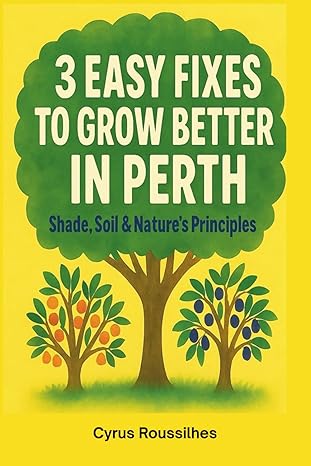
3 Easy Fixes to Grow Thriving Gardens
Perth is not a jungle; it’s more like a sun-baked oven with a refreshing sea breeze and sandy soil. Growing fruit trees in this environment can seem like an uphill battle, but with the right knowledge, it becomes much easier. This book serves as your guide.
By focusing on three key aspects — shade, soil health, and strategic planting — you can transform your garden into a thriving oasis. You’ll enhance biodiversity, reduce your workload, and successfully grow delicious fruit in areas where it seems impossible.
This book covers:
- The benefits of shade
- Affordable ways to improve sandy soil
- How to utilize weeds, fungi, and microbes to your advantage
- Tips on what to plant, where to plant it, and how to let nature do the hard work
This isn’t about creating perfect gardens. It’s about embracing productive chaos that works with Perth’s intense sun, salty winds, and unpredictable weather. A garden that’s messy, layered, and full of life — just as nature intended.
Cyrus, a rare fruit grower, is on a mission to inspire. Whether you have a small garden or open land, discover unique fruit varieties that will thrive in your space. We attract rare fruit enthusiasts and families looking to grow more at home. Hobby farmers and established growers also turn to us for fresh ideas and new income streams. Did you know subtropical bush tucker and South American varieties like Eugenias, Garcinias, and Jaboticabas thrive in Perth with some shade? For 15 years, Cyrus has grown over 700 varieties on his 700sqm property using syntropic, regenerative methods. Through his nursery, Primal Fruits Perth, and social media, Cyrus shares his knowledge.
| Extracts from the book courtesy of the author, Cyrus Roussilhes. Biochar
2.50 Biocharcoal – Housing for Microbes & Nutrients Biochar isn’t fertiliser—it’s real estate. Long-term, low-maintenance, microbe-friendly real estate. If Perth’s sandy soils feel like leaky rentals, biochar is the soil equivalent of a double-brick home with insulation and water tanks similar to Perth’s crazy Real Estate Boom of the 2020s. Also known as “Terra Preta” (Chapter 3.2). This valuable “black earth” biochar is made by cooking organic material at very high temperatures without much oxygen. It’s called pyrolysis and locks in carbon and creates a charcoal-like material that doesn’t rot, leach, or break down – ever! Okay, maybe not “never”, but close enough: biochar can last thousands of years in soil. It’s one of the only things you can add to your garden and know it’ll still be working hard long after you’re compost. (Cheaper and more useful than a funeral plot). Biochar is extremely porous, full of billions of tiny holes. That makes it perfect for holding water, nutrients, and microbes. In sandy Perth soils where everything disappears faster than your patience during summer watering, biochar acts like a sponge and a survival bunker, all in one. It stores fertilizer instead of letting it wash away and provides microbes with the perfect environment to live, breed, and thrive. But here’s the catch: Raw biochar does bugger all. If you use it straight from the bag without charging it, it can soak up nutrients from your soil—basically stealing breakfast from your plants. That’s why you always charge your biochar first, like topping up a prepaid phone or milk-soaking Weet-Bix before eating. Charging is simple: mix liquid fertilisers like worm wee, fish juice, kelp tea, or compost brew with water—roughly 5 litres to one bucket of dry biochar. Stir it through and let it soak for a few hours. Once those holes are filled, the biochar becomes a stocked pantry for your microbes and a hydration station for your roots. Plants notice the difference within weeks, especially when paired with compost or mulch. Utopia Deep in the Amazon, long before fertiliser or influencers, Indigenous people made soil that still feeds plants today. They called it Terra Preta — black earth. It wasn’t natural. They made it from “rubbish” — charcoal, bones, food scraps, even broken pots — and fed it to the land. And it worked. Not for a season, but for centuries. While other cleared rainforest soils quickly died, Terra Preta stayed rich. It can take 20 years of bad farming to ruin it. No magic bottle. No fertiliser run. Just smart, slow soil-building that lasts. The magic ingredient? Biochar — charcoal made by burning wood with little oxygen. Instead of turning to ash, it becomes a sponge. It holds moisture, minerals, and microbes like a hotel for soil life. It doesn’t break down. It just stays there, doing its job, year after year, like a quiet champion. Modern scientists studied it and went: “Wait, how did they figure this out?” Turns out, we’ve been composting wrong and binning the good bits for centuries. But here’s the kicker — you can do this in Perth. Yes, even in Perth sand that acts more like a sieve than soil. Perth’s dirt is dry, dead, and hydrophobic. It’s like planting into powdered Weet-Bix. But Terra Preta-style building fixes that. First, make or buy some biochar. If you’re keen, burn your prunings in a low-oxygen fire pit and save the charcoal. Soak it in worm juice or aged manure — this is called “charging,” but really, it’s just marinating your charcoal in garden soup. Then dig a trench or build a 30 cm mound. Start layering like a lasagna: biochar, food scraps, bones, clay or bentonite, garden waste, compost, then top with mulch. Water it well and let it rest. In two weeks, plant herbs, legumes, or something leafy. Then walk away and act like you know ancient secrets. Over the next few months, the soil gets darker. Water sticks around longer. Worms move in like it’s a rental boom. By the one-year mark, trees grow stronger and need less watering. In 2–3 years, your patch becomes a living engine. No digging. No runoff. Just rich, black earth that holds together and feeds itself. Some Perth tips: don’t skip clay — without it, you’re building on fluff. Don’t overdo the ash — unless you want your bed to turn into a chemistry experiment. Add fungal tea if you can. Chop and drop your weeds. And maybe don’t tell your neighbour you’re burying bones — context matters. In a world obsessed with instant results, Terra Preta is slow gardening at its finest. You’re not just composting. You’re creating a soil time capsule. Something that might outlive your fence, your garden shed, and possibly you. Build black earth. Grow bananas. Confuse archaeologists later. |

The book is available here https://primalfruits.com.au/products/3-easy-fixes-to-grow-better-in-perth-shade-soil-and-syntropic-principles


