From lullabies that soothe newborns to melodies that unlock memories in the elderly, music has long played a powerful and universal role in human life. Across cultures and centuries, it has been used for healing, celebration and connection. Now, modern neuroscience is finally catching up with what ancient healing traditions have long understood – that music does not just sound good, it also does good.
There is much research today turning attention to the neurological and cognitive benefits of music, from improving brain plasticity and emotional regulation, to enhancing learning, reducing anxiety, and easing the symptoms of dementia. It can profoundly support wellbeing, especially in both the very young and the elderly. Interestingly, these scientific findings often align with the practices of ancient healing traditions, which have always used rhythm, voice and sound as tools for emotional, physical, and spiritual balance. So as we start to align the insights of modern science with the wisdom of ancient cultures, we begin to see music not only as entertainment, but as true medicine.
Music as Energy
 At the most fundamental level, everything that is alive in the universe is made up of energy. Our bodies are composed of atoms, which are made of protons, neutrons, and electrons, and they all vibrate with movement. Even our thoughts and emotions produce measurable energy signals. The nervous system communicates via electrical impulses, the heart generates an electromagnetic field, and each cell in the body has its own energetic activity. This means that the body does not just exist physically, it also operates as a dynamic, energy-based system.
Music is also a form of energy. When sound is created, through a voice or instrument it moves through the air as vibrational sound waves which are measured in hertz (Hz). So the body does not just hear music, it feels it on a cellular level which affects the vibrational frequency of our cells.
Some researchers, sound therapists and healers alike, suggest that specific musical frequencies can guide the body’s energy fields into different states. For example:
- Low-frequency music or sound at around 40 Hz can calm an overstimulated nervous system.
- Rhythmic drumming or chanting can shift brainwaves into alpha or theta states. Alpha waves (8–12 Hz) promote calm focus, creativity, and a sense of ease, while theta waves (4–7 Hz) support deep relaxation, emotional release, and access to the subconscious. This is often reached in meditation, trance, or just before sleep.
- Higher frequency music or sound at around 528 Hz has been associated with mental clarity, mood elevation, and creativity.
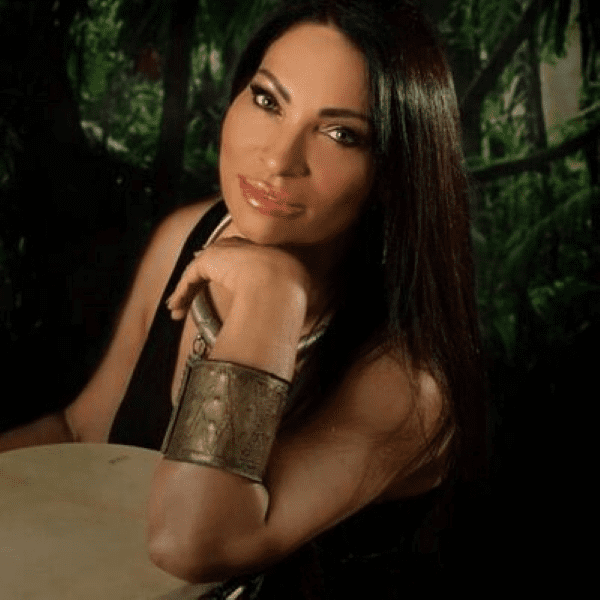
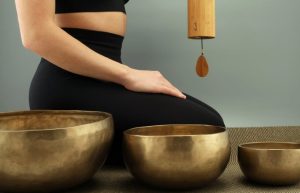 “Everything has a frequency, including emotions and illness,” says Antonia Ruhl, a globally acclaimed shamanic healer and teacher. “Through music and sound, we’re not just addressing the symptoms, we’re communicating with the body on a cellular level and aiming to restore energetic balance to ones body and soul.”
In traditional Shamanic rituals, steady rhythmic drumming helps entrain brainwaves to slower frequencies, guiding people into altered states of consciousness where inner wisdom, emotional release, and deep healing become accessible. Other instruments, such as flutes, singing, and seed rattles, may also be used to awaken the body and shift blocked energy so that the parasympathetic nervous system activates, and our ‘fight or flight’ response is counterbalanced. As the body shifts into this state of rest, repair and recovery, blood pressure lowers, heart rate slows down, digestion improves and a healthier state of being is experienced. And although modern science may use different terminology such as ‘nervous system regulation’ or ‘cortisol reduction’, the physiological results are similar if not the same.
Even from our time in the womb, the sound of a mother’s heartbeat which is the first rhythm ever experienced, is deeply regulating for infants. Vibrating between 1-1.67 Hz, the low rhythmic frequency, especially when felt skin-to-skin, synchronises with the baby’s own heart rate and nervous system, providing emotional comfort, reduced pain and thermal regulation. Whether it is this heartbeat or a particular frequency of music, both help to promote brain development and bonding, especially from birth to age three where the brain develops at a rapid pace.
At the other end of life’s spectrum, music supports cognitive and emotional health to the elderly, especially to those living with dementia by calming the mind and reducing agitation. Playing familiar music activates the medial prefrontal cortex which helps to bring back clarity and joyful moments, as this is one of the last parts of the brain to be affected by the neurodegenerative condition.
Ancient cultures have also always recognised the profound role that music plays in human experiences. The Kayapo` indigenous people of the Brazilian Amazon, have integrated music, sound, and ritual as vital components of life, especially during moments of birth, initiation, and growth. Sacred instruments are rhythmically played to welcome newborns into the world, enveloping them in the healing vibrations of their community. These sounds are believed to align the infant’s spirit with the energies of the earth, offering protection, connection, and a sense of belonging from the very beginning.
With an inherent knowing that humans are designed to be connected with nature, Kayapo` music blends with it, echoing the rhythms of birdsong, insects, flowing water, and wind. This interconnection reinforces their belief that life is a continuous cycle, and music helps us harmonise with the natural world at every stage of the journey.
Antonia Ruhl, who studied with different spiritual masters including the medicine man of the Kayapo` tribe, comments, “When we embrace sound as a sacred language, we begin to understand that music is not only for celebration and entertainment, it is for grounding, awakening, and transformation. The Kayapo` like many ancient cultures, knew that the right vibration could welcome a soul into the world with strength, and peace as well as ease the elderly or sick into a soothing transition from life to death.”
The Kayapo` shamans are not the only ones to have embraced the magic of music in their everyday life. Originating in India, Ayurvedic medicine uses specific sounds and frequencies to heal chakras or the body’s energy centres that are linked to emotional and physical health. Similarly, Chinese medicine aligns musical tones with specific organs, using sound to restore harmony in the body. And as more and more people look to explore alternative therapies as a supplement to western medicine, many of these practices including sound healing sessions, have begun to enter mainstream spaces such as yoga studios, wellness retreats, and mental health programs as they’re now being recognised for their holistic benefits.
Music as a ‘whole-brain’ experience.
 Beyond its effects on the body’s vibrational energy, music also plays a uniquely powerful role in how the brain functions, as it is one of the rare activities that stimulates both sides of the brain simultaneously. In Western cultures, the left brain tends to dominate, with an emphasis on reading, mathematics, and analytical reasoning whilst the right side is more commonly known to be responsible for creativity, imagination, intuition, music, art and emotions. Our true genius however lies in the ability to utilise both hemispheres of our brain which according to many ancient traditions, is imperative to developing one’s inner senses, intuition and access to their higher Self. The nerve bundle that connects these two hemispheres called the corpus callosum, becomes particularly robust and evident when someone plays an instrument, as they read music (left hemisphere), feel rhythm and tone (right hemisphere), and coordinate physical movement (motor cortex).
“When both sides of the brain are balanced and working in harmony, people experience greater clarity, peace, and direction,” says Antonia Ruhl. “Just as lifting weights builds muscle, engaging with music strengthens the brain’s networks. Whether through learning an instrument, singing, or even mindful listening, music can support the development of a more holistic and intuitive self.”
Music is energy, just as we are. It vibrates, moves, heals, and connects. On a scientific level, it activates the whole brain, supporting mental, emotional, and physical health and on a spiritual level, it helps align us with our inner selves and the world around us. From prenatal bonding and childhood learning to stress relief and elderly care, it is a tool that supports the entire arc of human life. It’s no wonder that ancient cultures have always held it in such reverence and perhaps why it remains one of humanity’s most trusted medicines that heal the heart, mind and soul on so many different levels.
For more information go to https://www.consciouslivingdirectory.com.au/blog/where-the-ancient-healing-power-of-music-meets-modern-science
By Sandra Lo Giudice

Sandra Lo Giudice is a Melbourne-based writer, creative, and trained musician with a professional and academic background in business and marketing. She is currently focused on studying alternative therapies and sharing her nature-based wisdom through storytelling and embodied practice which draws on her deep personal connection to nature and humankind.